
17 Best Things to Do in Nazaré, Portugal (Beyond the Giant Waves!)
If you are planning to visit Nazare, this guide is for you. It includes all the amazing things to do in Nazaré and its surroundings year-round, my favorite restaurants, and where to stay. Additionally, since the primary reason I visited Nazare is to watch the waves, I will include information on how, when, and where to observe the Giant Waves.
I stayed in Nazare for 15 days and extended my stay to increase my chances of seeing the spectacular giant waves. On quiet days, I would explore the spectacular Portuguese landmarks scattered around the surrounding hills and along the coast.
Trust me, the area is a treasure trove of charming medieval towns, old majestic cathedrals, a dramatic coastline, and delicious food. I fell in love with this region of Portugal, and I hope this post shows it.
As I am editing this article and updating it with new pictures and info, I am back in Nazare and will stay for the next three months to learn more about this little town’s fishing history and culture, legends and myths, and share them with you. I was so excited on the first day that I went out, walked my way around, and saw places I hadn’t previously visited, though I knew they were there — I just didn’t have the time before.
One thing I didn’t realize on my first visit was the legend of the deer, which is why there’s a deer statue on the way to the lighthouse (more about it later).
One thing I didn’t realize back then was the legend of the deer, which is why there’s a deer statue on the way to the lighthouse (more about it later).
Keep reading, and this guide will help you plan your amazing trip to Nazare.

This post may contain affiliate links. If you purchase through them, I may earn a small commission at no extra cost to you. Thanks for supporting my small business.
Nazare at a glance
Once a quiet fishing village, Nazaré has evolved into one of the world’s most renowned surf destinations. With its colossal waves, picturesque beaches, and rich cultural heritage, Nazaré attracts surfers, history enthusiasts, and seafood lovers alike.
However, Nazare not only attracts those who want to witness record-breaking surf, but also any travelers who want to explore the town’s traditional charm.
Nazaré is, without a doubt, a must-visit spot in Portugal.
In one of the informative boards in the Lighthouse Surf Museum, the inscription of a surfer says, “Climbers have the Everest, Surfers have Nazare”.
I came to Nazare with the sole purpose of photographing the giant waves. But there’s much more you can do in this pretty town, including admiring the spectacular views all around it and learning about the traditional fishing industry.
Where is Nazarè: Nazarè Maps


How to Get to Nazaré From Lisbon and Porto
Nazaré is located on the Silver Coast of Portugal, approximately 120 km north of Lisbon.
PRO TIP – Here are all the possible ways to reach Nazaré, although my absolute favorite is by car. In fact, I rent a car in Portugal every time I come here. Although local transportation is very cheap and efficient, I love the freedom the car gives me, and it’s not so expensive if you come off-season. July and August are the most expensive, not only for car rental but also for accommodation. See the best time to visit Nazaré below.
Porto or Lisbon to Nazare by car
From Lisbon is a 1.5-hour drive from Lisbon via the A8 highway. I recommend checking Discover Cars to find the best car rental deals and reading my post on driving in Portugal for smart tips.
From Porto is a little longer, but it’s still a beautiful ride. You can check out my post on traveling from Lisbon to Porto, which includes a stop in Nazare, in case you decide to set off for an adventurous road trip. If you go straight from Porto to Nazare, it’s about a 2-hour drive. However, you could take a couple of days to explore some amazing towns and cities, such as Vila Nova de Gaia, Coimbra, Fatima, Aveiro, and Tomar.
Getting to Nazare by Bus
By bus: Rede Expressos and FlixBus operate direct buses from Lisbon, taking around 2 hours, and from Porto, about 3 hours.
Getting to Nazare by Train
From Lisbon – Taking the train from Lisbon to Nazaré is a slower option compared to driving or taking the bus, with the trip taking at least 3 hours. The journey starts at Sete Rios station, where you’ll take a train to Caldas da Rainha.
From there, you’ll need to transfer to a regional train that goes to Famalicão da Nazaré. Once you arrive, the town center is still about 8 kilometers away, so you’ll need additional transport to get there. A one-way ticket costs €9.65.
By tour – If you prefer a hassle-free visit, joining a guided tour from Lisbon or Porto is a great option. Many tours combine Nazaré with Alcobaça, Batalha, or Fátima, allowing you to explore multiple historical sites in one trip. More about them at the end of the post.

Best Time to Visit Nazaré
The best time to visit depends on your interests. If you want to have beach time and swim, obviously, July and August are the best months, but they will be very crowded and more expensive.
For big wave surfing from November to March, when the waves are at their peak. However, it’s not every day that they get waves; they will know with a week in advance and more precisely closer to the date. The good part is that you don’t have to book way in advance because it’s low season, and you will easily find a place to stay or a car to rent at the last minute.
Shoulder seasons are my favorites in general, particularly May, June, September, and October, when the weather is warm and sunny but the crowds are not as intense. Also, hotel rates are reasonable. However, at this time, you don’t usually have big waves.
An exception can occur, as this year saw a significant swell on August 26th, brought about by a hurricane formation in the Atlantic Ocean. So you can never tell with the weather these days.
Nazaré As a Surfing Destination
Nazaré is a legendary spot for big-wave surfers, drawing professionals from around the world to challenge its monstrous waves.


Why Are the Waves at Nazaré So Big?
The massive waves at Nazaré are caused by the Nazaré Canyon, a deep underwater trench that channels and amplifies ocean swells. This natural phenomenon produces waves reaching 80-100 feet, making it one of the most extreme surf locations globally. If you are interested in the Giant Waves of Nazare, you can read more about them in my dedicated post.
Best Things to Do in Nazaré
1. See the Giant Waves of Nazaré
You can check out some of the local channels for the wave alerts to know when to expect the swells. It’s not every day that you can admire this nature show off. Any time between October and March, there are good chances of seeing the giant waves.
So when you get the alert, head to Praia do Norte through the Sao Miguel Arcanjo Fort and enjoy the views. I went there every time there was a wave alert and spent the entire day watching the show and photographing.
I never get tired of watching them. I am particularly amazed by what humans can physically do, challenging such powerful forces of nature like these giant waves. I hope you enjoy my pictures 🙂
More about it in my dedicated post on the Giant Waves of Nazare.

2. Walk Out to the São Miguel Arcanjo Fort and the Big Wave Museum
This historic fort overlooks Praia do Norte, offering stunning views of the waves. Inside, you’ll find a small surf exhibition with surfboards from record-breaking rides and the big names of the surf world.


Besides the tribute to surfers, this is one of my favorite spots in Nazare for the spectacular views of both the city and beach, and Praia do Norte. I especially love it at sunset and sunrise for the magical light, even when the sea is flat.
In the forth, you can also find a room with a temporary Photography exposition and another room where you can read about the Canyon and how it creates these giant waves.
To get to the fort, you must park the car in the free parking on top of the hill near the church and plaza. It’s about a half-mile walk to the fort from there, but if you don’t feel like walking, there, during surfing days, you can find a taxi that takes you up and down the hill for a few Euros.
At the top, you can also find day and night food kiosks offering delicious food and drinks, public restrooms, vendors, and music.

3. Take a Walk at Praia do Norte
A rugged and wild beach, Praia do Norte is known for its massive waves and dramatic coastline. It’s not ideal for swimming, but if you love walking on the beach, that’s a good place. You can get there from the main road north to the fort or from the Fort itself, where you can find an easy trail to the beach. This trail is usually crowded during wave days.
4. Explore O Sítio
The clifftop district of O Sítio offers breathtaking views over Nazaré and is accessible by the Nazaré Funicular if you don’t feel like walking.
This is where you will find the cathedral Nossa Senhora da Nazaré (more about it in the box below), cafes and restaurants, besides incredible lookout points over Nazaré beach and old town at Miradouro do Suberco.
By the miradouro, you can usually find cute kiosks selling sweets and the famous Ginjinha, the local sweet liquor served in a shot form with a piece of the fruit at the bottom of the cup. They serve it in chocolate cups, which makes it even more delicious. It is a favorite liqueur of many Portuguese and a typical drink in Lisbon, Alcobaça, Óbidos, Marvão, Covilhã, and the Algarve.


From the Sitio, you can get to the São Miguel Arcanjo Fort. So you can plan a full visit to the area in one day. Parking spaces are scattered around the area, although it’s difficult to find a space during Big Waves days.
Some Historical facts
The Sítio of Nazaré, perched above the cliffs of Nazaré in Portugal’s Oeste region, is the historic heart of this coastal town. For centuries, it’s been a major pilgrimage site, especially on September 8, the day of Nossa Senhora da Nazaré, attracting thousands of visitors—including Portuguese royalty back in the day.
Legend says the original chapel was built in 1182 by D. Fuas Roupinho, right above the cave where the statue of Our Lady of Nazaré had been hidden during the Muslim occupation. Later, in 1377, King Fernando I founded the sanctuary that still stands today, giving rise to the first homes and community in the area.
Though the sanctuary was looted during the Napoleonic invasions in 1808, the Sítio recovered and became a lively hub for pilgrims and summer visitors well into the 20th century. Today, the area—still surrounded by its old walls—features the sanctuary, a bullring, fountains, and large plazas, keeping its traditions alive during the annual Festas de Nazaré in early September.
The Ermida da Memória Chapel

In the mists of 12th-century Portugal, Dom Fuas Roupinho, alcaide of Porto de Mós Castle, pursued a deer through thick fog near the Atlantic coast. As his horse galloped at full speed, the deer vanished—and suddenly Dom Fuas found himself at the edge of a towering cliff above the sea. In desperation, he called upon Nossa Senhora da Nazaré (Our Lady of Nazareth), and miraculously, his horse stopped mere inches from the precipice.
In gratitude for his deliverance, Dom Fuas built a chapel on the clifftop at Sítio, where a small statue of the Virgin Mary had been hidden in a cave since the 8th century. This chapel became the Ermida da Memória (Chapel of Memory), marking the very spot where the miracle occurred. The chapel stands as a testament to faith and divine intervention, with the original rock bearing the hoofprint of Dom Fuas’s horse still visible inside.
The Ermida da Memória is open to visitors and can be accessed near the Sanctuary of Nossa Senhora da Nazaré in Sítio. The small chapel offers a glimpse into this legendary moment, with its simple interior preserving the sacred memory of the miracle that established Nazaré as an important pilgrimage destination.
Nazaré Veado
The veado (deer) statue in Nazaré Sítio carries a powerful dual meaning that bridges medieval legend and modern courage. It honors the miraculous deer whose disappearance saved Dom Fuas Roupinho from plunging off the cliff, but it has also been reimagined as a symbol of the fearless big-wave surfers who have made Nazaré world-famous.
Often depicted with a surfboard, the deer represents the daring spirit of those who challenge the giant waves at Praia do Norte—some of the largest surfable waves in the world. Like Dom Fuas facing the abyss in the fog, today’s surfers confront their own precipice with courage and determination. The ancient veado has become a timeless emblem of bravery at the edge of the unknown, uniting pilgrims of the past with wave riders of the present.
NEVER TRAVEL WITHOUT INSURANCE
I use and recommend SafetyWing, and it’s even more convenient now. Use the code BOUNDLESS and redeem your 8 weeks of electronic theft coverage. For new Nomad Essential members only. This is how to claim it:
- Click on this link
- Scroll down until you see a pink camera (like in the picture below)
- Click on it and type BOUNDLESS
- Follow instructions…

5. Ride the Nazaré Funicular

The historic funicular connects O Sítio with Praia da Nazaré, offering not only a means of transportation but also a fun way to enjoy the city’s views. I would recommend taking the ride and walking the stairs even if you have a car.
6. Take a walk from the Sitio to Nazare Centro or up from the Centro to Sitio
I did this walk during my second visit. The first thing I did was to walk around town and find the places I remembered from the previous time. I love going to a place and feeling familiar with certain spots. However, I did something new this time. I decided to walk up the stairs to the sitio and back to my place. This is something I want to do as part of my daily routine to complete my daily steps.
The views from the stairs are spectacular, even better than from above, in my opinion, because you also have spectacular flowers in the composition frame.
You also have a bench to sit and admire the view, and a swing for your instagram shot 😉


7. Enjoy Praia da Nazaré
The town’s main beach is perfect for sunbathing and swimming in the summer months, when it will be very crowded. I was there in February and March, and it was absolutely spectacular, especially at sunrise and sunset. A few crazy bodyboarders and surfers were enjoying some small waves. It was fun to watch and photograph.


8. See the Boats of Nazaré
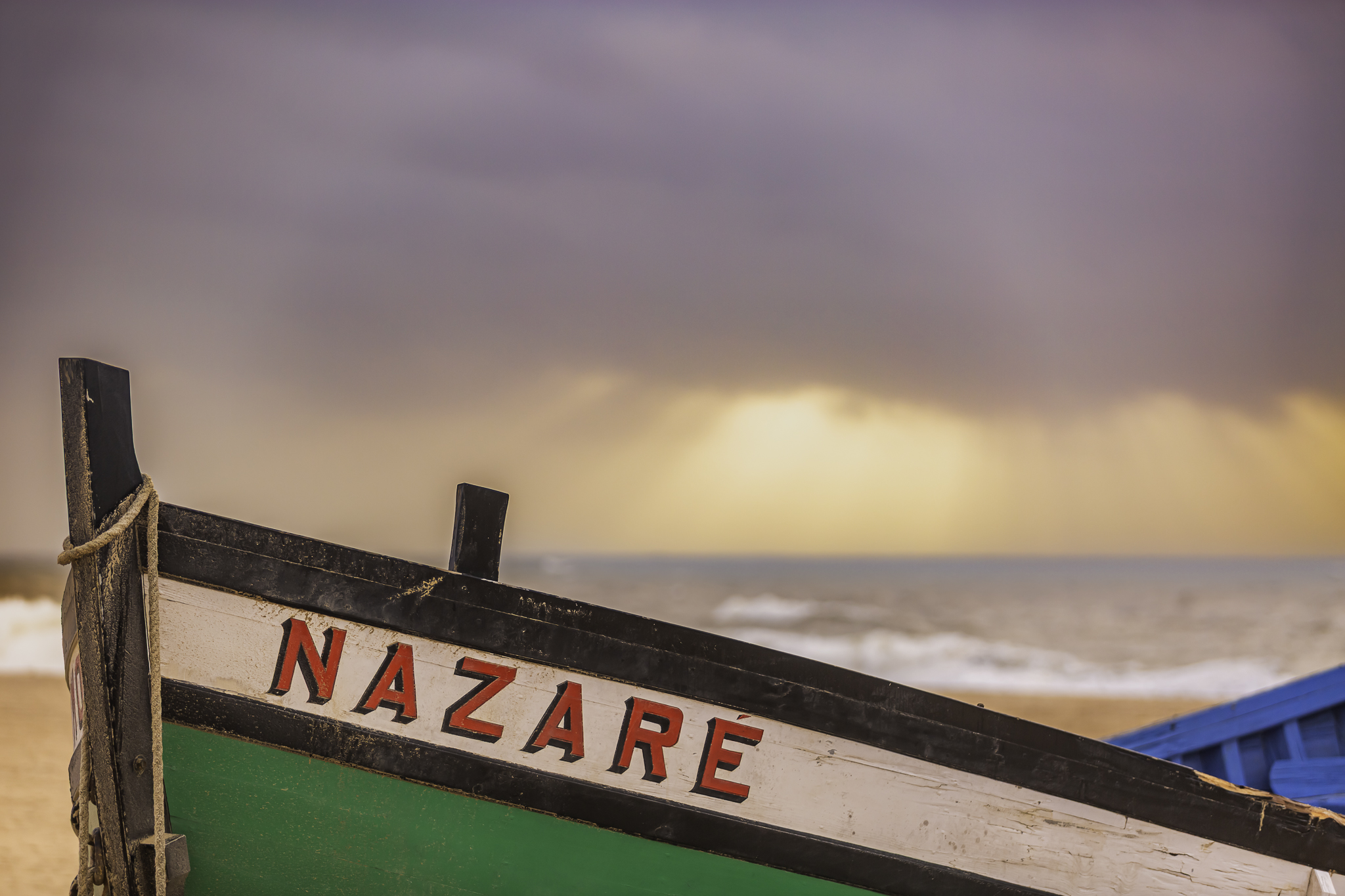
The traditional wooden fishing boats of Nazaré are as iconic as the town’s towering waves.
The boats are a true symbol of the town. Narrow and colorful, with elegant curved prows, these boats are decorated in a style that dates back to the Phoenicians, who settled in the area in pre-Christian times. Still used by some fishermen today, they were once used by generations of fishermen to brave the Atlantic and bring in the daily catch.

With their narrow, curved shape and painted prows—often decorated with symbols of faith, luck, or the sea—they’re a beautiful reminder of Nazaré’s deep fishing heritage.
You can admire these boats lined up on the beach near Praia da Nazaré. They’re no longer used for work but are carefully preserved as cultural treasures. They make a perfect backdrop for photos and give visitors a glimpse of what life was like in this once small, hard-working fishing village.
These boats, combined with Nazaré’s strong ties to the ocean, tell the story of a community that has always depended on the sea—first for survival, and today, as part of its charm for visitors from around the world.

9. Visit Seca do Peixe, the Dried Fish Museum
Learn about Nazaré’s traditional fish-drying methods at this unique open-air museum, right near the traditional boats.
A visit to the Seca do Peixe, the Dried Fish Museum, is a must if you want to truly understand Nazaré’s fishing heritage. This small but fascinating spot sits right on Praia da Nazaré, where generations of women once dried the daily catch in the sun and salty breeze.
Today, you can still see fish laid out on wooden racks, keeping this centuries-old tradition alive. The museum explains the history and techniques of fish drying, which was once the primary method locals used to preserve their food and support their families.
It’s a quick stop, but one that gives you a deeper appreciation of the town’s roots and the hard work that built its reputation as Portugal’s most iconic fishing village.


10. Dine on Fresh Seafood
Nazaré is renowned for its seafood, particularly dishes such as grilled sardines, seafood rice, and caldeirada (a fish stew). Walk around the narrow lanes that lead to the beach or around the plaza in the Sitio and try the restaurants that catch your attention.
11. Visit Miradouro da Pederneira
Another fantastic viewpoint, offering a different perspective of Nazaré. I was actually staying right there by stroke of luck, as I didn’t know at the time of booking. It was a lovely tiny apartment that I can recommend.


12. Enjoy some of the most amazing sunset views
Nazaré is one of the best places to watch the sunset in Portugal. On clear evenings, the sky turns pink, orange, and yellow, creating a stunning display over the Atlantic Ocean. When a soft layer of fog rolls in, it adds a dreamy and dramatic atmosphere that makes the views even more memorable.
If you’re looking for the best sunset spots in Nazaré, these are the places you shouldn’t miss:
Pederneira Viewpoint
One of the top viewpoints in Nazaré, Pederneira offers wide panoramic views over the town, beach, and ocean. It’s a great spot to watch the golden light slowly cover the coastline.
Cemetery Road Viewpoint
Follow the road near the cemetery and you’ll reach a higher vantage point with incredible views over Nazaré. From here, you can see the lighthouse, the entire beach, and the town from above.
Nazaré Beach (Praia da Nazaré)
The main beach is one of the easiest and most relaxing places to watch the sunset. It’s perfect for a slow walk along the shore while the sky changes color.
Sítio (Upper Nazaré)
The Sítio area offers several great viewpoints. You can watch the sunset from the main balcony, along the stairs, or near the lighthouse for a more elevated perspective.
Praia do Norte
Praia do Norte offers a more rugged and wild setting. Known for its massive waves, it’s also one of the most dramatic places to watch the sunset in Nazaré.
13. The Traditional Dress of Nazaré Women
One of the most striking and iconic sights in Nazaré is the traditional dress worn by local women — particularly the older generation, who can still be seen wearing it in daily life. The outfit consists of seven brightly colored, layered petticoats, each representing a different day of the week, worn beneath a wide skirt. The multiple layers were traditionally practical too, providing warmth in the windy coastal climate.
The women also wear embroidered aprons and headscarves, and their striking appearance against the backdrop of the whitewashed buildings and colorful boats has made them one of the most photographed subjects in Portugal.
The tradition is deeply tied to the fishing community — women would wait on shore for the fishing boats to return, and the colorful layers made them visible from a distance. Today, while younger generations have largely moved away from the tradition, you can still encounter women in full dress near the beach and in the Sítio area, particularly on festival days.
If you’re lucky enough to photograph one of these remarkable women, always ask permission first — and have a smile ready. Many are proud of the tradition and happy to share it with respectful visitors.
Things to Do Near Nazaré
14. Alcobaça Monastery
If you only have time for one day trip from Nazaré, make it the Alcobaça Monastery. Just 15–20 minutes inland, this UNESCO World Heritage Site is a masterpiece of 12th-century Cistercian architecture and one of Portugal’s most fascinating historical landmarks.
The monastery’s peaceful cloisters and grand Gothic details make it a must-see, but its most famous attraction is the tombs of Pedro and Inês, Portugal’s legendary star-crossed lovers. Their intricately carved tombs face each other, symbolizing their eternal connection—a story as romantic as it is tragic.


After exploring the monastery, head to the main plaza just outside. It’s surrounded by charming little shops and an award-winning pastry shop where you can treat yourself to some of the best sweets in the region.
If you’re vegan, there’s also a cozy plant-based restaurant just around the corner, perfectly positioned with views of the monastery—an ideal spot for a relaxing lunch before heading back to Nazaré.
Pro tip: Before you leave, take a quick walk to the tower ruins overlooking the town. From there, you’ll get spectacular views of the monastery and the surrounding valley—an unforgettable perspective that’s perfect for photos.
15. Batalha Monastery


If you have extra time, pair your visit with the Batalha Monastery, just a 30-minute drive from Nazaré.
Another UNESCO World Heritage Site, this stunning example of late Gothic and Manueline architecture was built to celebrate Portugal’s victory in the Battle of Aljubarrota in 1385.
Its intricate stone carvings, unfinished chapels, and soaring arches make it one of the country’s most impressive monuments and a perfect addition to your cultural itinerary.
16. Sanctuary of Fátima

The Sanctuary of Fátima, about an hour’s drive from Nazaré, is one of the most important pilgrimage sites in the world. It marks the spot where, in 1917, three shepherd children reported visions of the Virgin Mary. Today, the sanctuary complex is vast, with two beautiful basilicas, a large open square, and the Chapel of the Apparitions, which draws millions of visitors each year.
While it’s undeniably significant from a historical and cultural perspective, the site feels quite commercial with lots of souvenir shops and a busy atmosphere, so I didn’t feel the sense of peace or spirituality some visitors would expect. But maybe it was just me. Still, it’s an interesting stop if you want to understand its role in Portugal’s religious identity.
17. Tomar
The charming town of Tomar, about an hour and a half drive from Nazaré, is one of Portugal’s most fascinating historical gems. Best known for the Convent of Christ, a UNESCO World Heritage Site, Tomar was once the headquarters of the Knights Templar in Portugal.
The convent’s mix of Romanesque, Gothic, Manueline, and Renaissance architecture makes it an absolute masterpiece and a must-see for history and architecture lovers.
Beyond the convent, Tomar’s old town is perfect for wandering, with cobbled streets, traditional cafés, and a relaxed vibe that feels worlds away from the coast.

Although it makes a great day trip from Nazare, I would recommend spending a couple of nights there and also take your time to stroll around town and visit the Almourol Castle

18. Obidos Castle
The medieval town of Óbidos, just about 40 minutes from Nazaré, is like stepping straight into a storybook. Enclosed by ancient stone walls, this charming village is famous for its cobbled streets, whitewashed houses with colorful trims, and a hilltop castle that now serves as a unique hotel.
Spend a few hours wandering the narrow lanes, browsing the local craft shops, and sampling the region’s famous ginjinha, a cherry liqueur often served in a chocolate cup.


Being a local attraction as well, Óbidos tends to be more crowded on weekends. Regardless, it’s a magical stop and an easy, unforgettable day trip from Nazaré that you shouldn’t miss.
My favorite thing to do was to walk along the city walls and admire the spectacular views of the town, the castle towers, and the surrounding countryside.
If you can splurge, you can spend a night in the charming castle hotel, Pousada Castelo de Obidos.
19. Peniche

The coastal town of Peniche, just about 45 minutes from Nazaré, is a paradise for ocean lovers and surfers.
Known for its rugged cliffs, scenic beaches, and the world-class Supertubos surf break, it’s a hotspot for both professional surfers and those who just enjoy the laid-back vibe of a surf town.
Peniche is also the departure point for boat trips to the Berlenga Islands, a protected nature reserve with crystal-clear waters, perfect for hiking, birdwatching, or simply enjoying a peaceful escape.

Combine that with fresh seafood at one of the town’s many local restaurants, and you’ve got the perfect coastal day trip from Nazaré.
What and Where to Eat (according to Guests’ reviews)
- Best seafood restaurants:
- Tosca Gastro Bar – Great for fresh seafood with a modern twist.
- A Tasquinha – A local favorite for traditional Portuguese dishes.
- Taberna d’Adelia – Cozy atmosphere with excellent seafood options.
- Must-try dishes:
- Grilled sardines
- Arroz de marisco (seafood rice)
- Polvo à lagareiro (octopus with olive oil and garlic)
Nazare Safety Tips for Wave Days
Watching the giant waves of Nazaré is an unforgettable experience, but it’s important to stay safe. The cliffs around Praia do Norte and the São Miguel Arcanjo Fort area can be unpredictable, and the power of the ocean here is truly extreme.
- Always stay behind the barriers and safety ropes at the fort and cliff viewpoints. These are there for a reason — rogue waves and sea spray can reach further than expected.
- Never turn your back to the sea when watching from the beach level or lower cliff areas.
- Avoid wet or slippery rocks near the waterline on wave days. The surge can be sudden and violent.
- Keep children close and supervised at all times near the cliff edges.
- Follow instructions from local police or safety personnel present on big wave days — they may close certain areas if conditions are dangerous.
- If you’re photographing, be aware of your surroundings at all times. It’s easy to get absorbed in framing a shot and lose track of where you are.
- The trail from the fort down to Praia do Norte can be crowded on busy surf days. Wear comfortable footwear with grip, as the path can be uneven.

Nazare Parking Guide
Parking in Nazaré can be challenging, especially on big wave days and during the summer season. Here’s what you need to know:
Praia do Norte / São Miguel Arcanjo Fort There is free parking on top of the hill near the church and plaza in Sítio. From there, it’s about a half-mile walk to the fort. On major surf days, spaces fill up extremely early — arrive before 8am if you want to park close. A taxi service usually operates between the plaza and the fort on busy wave days for a few euros.
Nazaré Centro Paid parking is available along the seafront promenade and in the streets surrounding the town centre. These spots fill up quickly in summer. There are also a few public car parks on the outskirts of the centre that are more likely to have availability.
O Sítio Parking is available scattered around the Sítio area, near the sanctuary and viewpoints. On big wave days, these spots are taken very early. If you can’t find parking, the funicular from the town centre is a great alternative.
💡 PRO TIP: On big wave days, consider arriving very early in the morning and staying for the full day rather than trying to come and go. Not only will this save you parking stress, but the waves and light change throughout the day and you won’t want to miss it.


Nazare Photography Tips
Nazaré is one of the most photogenic places in Portugal, and I say that as someone who came here specifically to photograph. Here are my best tips for getting great shots:
Photographing the Giant Waves The best vantage point for wave photography is the São Miguel Arcanjo Fort. Position yourself along the wall facing Praia do Norte for dramatic shots of the waves and surfers. A telephoto lens (200mm or more) will allow you to compress the distance and make the waves look even more imposing against the tiny surfers.
Shoot in burst mode — the waves are constantly changing and the decisive moment passes in fractions of a second. Early morning light gives you softer, warmer tones, while midday light is harsher but produces dramatic contrast with the white foam.

The Town and Beach The colorful fishing boats on Praia da Nazaré make for wonderful foreground subjects with the sea or town behind them. Golden hour (just after sunrise and just before sunset) is magical here. The funicular and the stairs between Centro and Sítio offer great elevated perspectives of the rooftops and coastline.
The Traditional Boats and Women The traditional wooden boats lined up on the beach are best photographed in the morning when the light hits them from the side. If you hope to photograph the local women in traditional dress, always ask permission first — a friendly approach is almost always rewarded.
Sunsets For sunset shots, head to the Pederneira Viewpoint or the Cemetery Road Viewpoint for wide panoramas, or to Praia do Norte for dramatic silhouettes against the wild ocean sky. A tripod is useful if you want to capture the long-exposure movement of the waves in low light.


Local Festivals
Festas de Nazaré (Early September) The Festas de Nazaré is the town’s most important annual celebration, held in early September in the Sítio area. The festivities centre around the feast day of Nossa Senhora da Nazaré on September 8th — a major pilgrimage day that has drawn devotees to this clifftop for centuries, including Portuguese royalty in centuries past.
The festival is a vibrant mix of religious processions, traditional music and folk dancing, bullfights in the Sítio bullring, fireworks, and street food stalls filling the plazas. Local women often appear in their full traditional seven-petticoat dress, making it one of the best times to experience Nazaré’s cultural heritage in full colour.
If you’re planning to visit in September, try to time it for the first or second week of the month to catch the celebrations. Accommodation books up faster than usual during this period, so plan ahead.
Big Wave Season Events While not a traditional festival, the big wave season (November to March) brings its own electric atmosphere to Nazaré. When a major swell is forecast, the town fills with surfers, photographers, and spectators from around the world. The energy on wave days is extraordinary — food kiosks open at the fort, music plays, and the crowd on the cliffs becomes a community of wave watchers united by awe.
The WSL (World Surf League) sometimes holds sanctioned big wave events at Nazaré, which draw even larger crowds and media coverage. Keep an eye on surf forecasting channels and the WSL website if you want to time your visit around a competition.

Where to Stay in Nazaré
Nazaré has accommodation options for every budget and travel style, from simple guesthouses to seafront apartments. I use Booking.com to search and compare options — it gives a good overview of what’s available across all price points and neighbourhoods.
Nazaré Centro (Town Centre) Staying in the town centre puts you within walking distance of the beach, restaurants, and the funicular. It’s the most convenient location and ideal if you don’t have a car. The streets closest to the seafront are the most sought-after, with some apartments offering direct beach views.
O Sítio (Upper Nazaré) Staying in Sítio is a wonderful experience — you’re surrounded by history, have immediate access to the best viewpoints, and can walk to the São Miguel Arcanjo Fort. It’s quieter than the town centre and especially beautiful in the early morning before the day-trippers arrive. Parking is easier here too.
Miradouro da Pederneira Area I stayed near Pederneira during one of my visits — completely by chance, as I didn’t know the location at the time of booking — and it turned out to be one of the best decisions of the trip. The viewpoint is right there, the area is peaceful, and the views are spectacular. I can highly recommend looking for accommodation in this neighbourhood.Suggested Hotels
Budget-Friendly hotels in Nazare
- Hotel Ribamar — A charming 3-star option in the historic centre, right near the funicular. Rooms feature old-world lamps and carved wooden bed frames, azulejo-tiled bathrooms in traditional Portuguese style, and an on-site restaurant serving fresh seafood. One of the most affordable options in town.
- Hotel Oceano — A beachfront hotel in the centre of Nazaré where you can watch the traditional wooden fishing boats from the restaurant. Simple and characterful, in a prime location.
Mid-Range hotels in Nazare
- Hotel Mar Bravo — A well-loved seafront hotel right on Nazaré’s main avenue, overlooking the beach. Features a seafood restaurant with sunset views and free parking — a rarity in the town centre. Consistently well reviewed for location and value.
- Hotel Maré — Just one minute from the beach in the heart of Nazaré. Rooms have balconies with ocean views, air conditioning, and a private bathroom. The hotel can also help you book activities and arrange car rental.
- Hotel Magic — Offering themed rooms with stylish, colourful décor, this hotel is a 3-minute walk from the beach. A fun, modern option with a lounge and bar. Great breakfast reviews.
- Hotel Praia — A 4-star hotel one minute from the beach, with a rooftop pool perfect for sunset dips, a sea-facing bar terrace, and a modern gym. One of the best all-round options in the centre.
Higher-End hotels in Nazare
- Hotel Miramar Sul / Miramar Hotel Spa & Apartments — A 4-star property in the heart of Nazaré with beautiful ocean views, three swimming pools including an infinity pool, a spa, and the Atlantic View Restaurant serving local and international dishes. A great choice if you want a more resort-style stay.
Guesthouses & Local Stays
Villamar Style Maison — A beautifully designed guesthouse with a garden, outdoor pool, and private parking. Located at the quieter south end of town but still walkable to the beach.
Na Crista da Onda Guesthouse — Simple, warm, and with a great location opposite the beach. A local gem with personal hospitality.
Tips for Booking
- For big wave season (November to March), you don’t usually need to book far in advance since it’s low season. You can often find excellent apartments at short notice.
- For summer (July to August), book as early as possible — Nazaré is very popular and good options disappear quickly.
- For the Festas de Nazaré in early September, book at least a few weeks in advance as accommodation fills up around the festival dates.
- I recommend using Booking.com to search for apartments with a kitchen if you’re staying more than a few days — it’s great for self-catering and keeping costs down.

Practical Information
Currency Portugal uses the Euro (€). ATMs are widely available in Nazaré town centre. Most restaurants and shops accept card payments, but it’s worth carrying a small amount of cash for kiosks, markets, and smaller establishments, particularly around the Sítio area and on wave days.
Language The official language is Portuguese. English is widely spoken in tourist areas, hotels, and most restaurants. Learning a few basic Portuguese phrases is always appreciated — a simple “obrigado” (thank you) or “bom dia” (good morning) goes a long way.
Tipping Tipping is not mandatory in Portugal but is appreciated. In restaurants, rounding up the bill or leaving 5–10% for good service is customary. For taxis, rounding up to the nearest euro is common. Tipping at kiosks and casual spots is entirely optional.
Getting Around Nazaré Nazaré’s town centre and Sítio are both compact and very walkable. The funicular connects the two levels of the town and is inexpensive and fun to use. If you have a car, you can reach Praia do Norte and the surrounding viewpoints easily, though parking can be challenging on busy wave days (see the Parking Guide section).
Internet & Connectivity Wi-Fi is available in most hotels, apartments, and cafés. If you need constant connectivity, consider purchasing a Portuguese or European SIM card, available at Lisbon or Porto airports and at mobile phone shops. Coverage in Nazaré is generally good.
Emergency Numbers
- Emergency services (police, fire, ambulance): 112
- PSP Police: 213 421 634
- Nearest hospital: Hospital Santo André, Leiria (approx. 30 minutes from Nazaré)
Budget & Costs
Nazaré is generally affordable by Western European standards, though prices rise significantly in July and August. Here are some approximate costs to help you plan:
Accommodation
- Budget guesthouses / hostels: €30–€60 per night
- Mid-range apartments / hotels: €60–€120 per night
- Premium seafront hotels: €120–€200+ per night
- Low season (November to March): prices can drop by 30–50%
Food & Drink
- Coffee (espresso): €0.80–€1.20
- Casual lunch (café or tasca): €8–€14 per person
- Seafood dinner at a mid-range restaurant: €15–€25 per person
- Ginjinha at a kiosk: €1.50–€2.50
- Grilled sardines (a portion): €8–€12
Transport
- Nazaré Funicular (one way): approximately €1.50
- Taxi from Sítio plaza to fort on wave days: €3–€5
- Bus from Lisbon (Rede Expressos / FlixBus): €10–€20 one way
- Car rental: from €25–€40/day in low season, €50–€100+/day in summer
Attractions
- São Miguel Arcanjo Fort & Big Wave Museum: free entry
- Ermida da Memória Chapel: free entry
- Dried Fish Museum (Seca do Peixe): free or small donation
- Alcobaça Monastery: approximately €6 adult entry
- Batalha Monastery: approximately €6 adult entry
So, Is Nazaré Worth Visiting? Final thoughts
Absolutely! Whether you’re a surf enthusiast, a history lover, or a foodie, Nazaré has something for everyone. From its world-famous waves to its traditional fishing culture and delicious seafood, this coastal town is a fantastic destination for a day trip or a longer stay.
